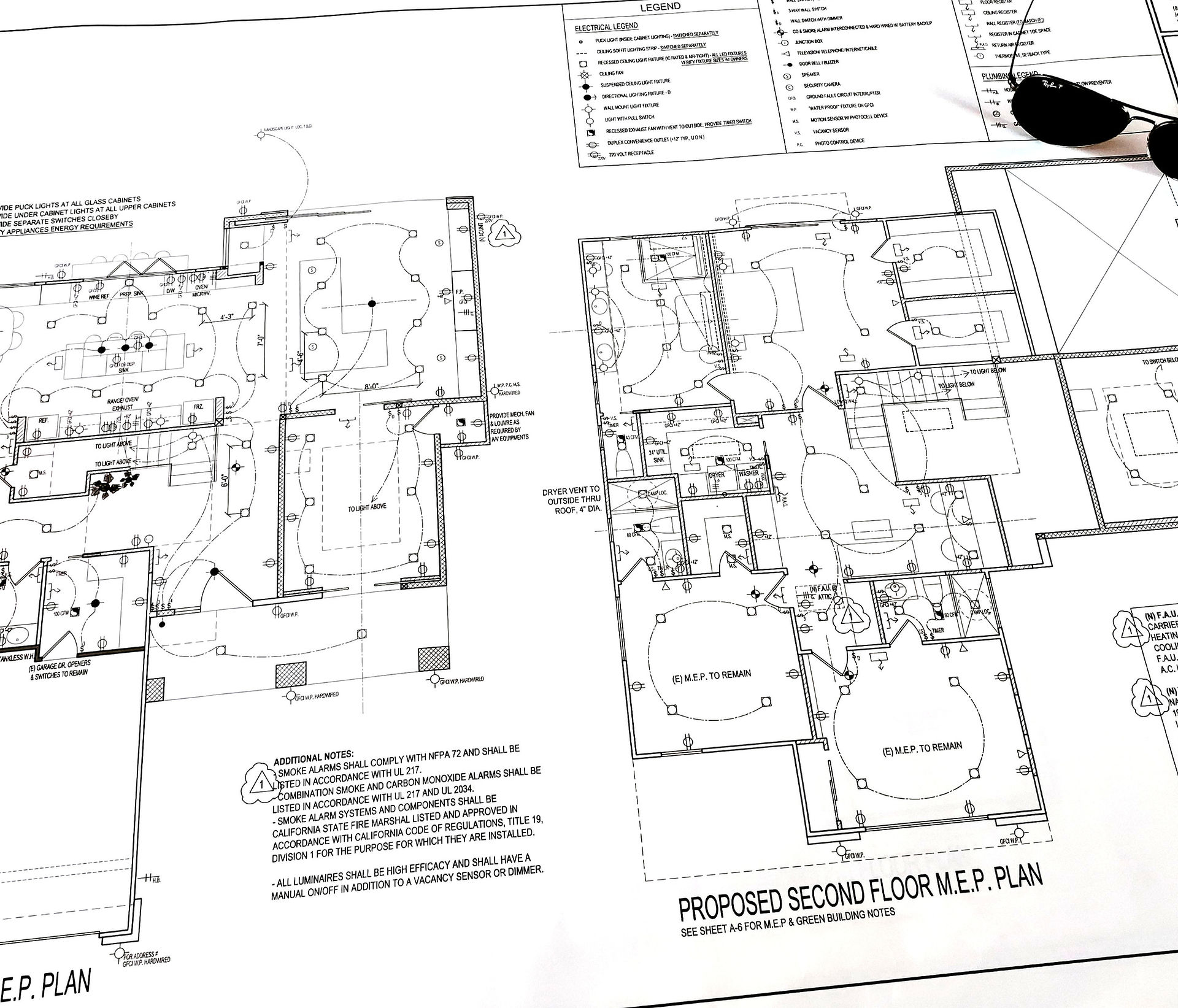


Alpine, CA Solar + Battery Installation
Tokai Electric expanded an existing 20-panel Enphase solar system in Alpine, California into a 39-panel, 16.29 kW DC rooftop solar and battery system. The project added 19 LONGi modules, additional Enphase microinverters, Enphase battery storage, and whole-home backup capability while working around an electrical service located approximately 300 feet from the solar equipment.
C10 Licensed · Enphase Certified · 10-Year Workmanship Warranty
PROJECT OVERVIEW
Alpine Solar Project at a Glance
Location: Alpine, California
Project type: Rooftop solar + battery expansion
Total modules: 39
Total DC capacity: 16.29 kW DC and 12.5 kW AC
Original array: 20 × Qcells Q.TRON BLK M-G2+ 425W
Original microinverters: 20 × Enphase IQ8AC-72-M-US
Expansion: 19 × LONGi LR5-54HPB-410M 410W
Expansion microinverters: 19 × Enphase IQ8PLUS-72-M-US
Solar combiner: Enphase Combiner 5
System controller: Enphase Controller 2
Battery storage: 1 × Enphase 10 + 1 × Enphase 10T
Backup configuration: Whole-home backup
Service distance: Approximately 300 ft from solar equipment
Contractor: Tokai Electric Inc.
PROJECT BACKGROUND
The Original Solar System
Tokai Electric originally installed the home's solar system during construction. The initial rooftop system consisted of 20 Qcells Q.TRON BLK M-G2+ 425W solar modules paired with 20 Enphase IQ8AC-72-M-US microinverters, an Enphase Combiner 5, and an Enphase IQ Battery 10T.
Although the 10T battery was installed as part of the original system, it was not yet operating as part of a complete backup and energy-management system. The later expansion added the equipment and electrical infrastructure necessary to bring the battery into operation and integrate it into a whole-property backup system.
The original 20-panel array provided useful daytime solar production, but the property's actual energy demand showed that additional solar generation and battery storage would be needed to achieve the homeowners' long-term goals.


SYSTEM EXPANSION
Why the System Was Expanded
The original system could produce approximately 6 kW AC during favorable daytime conditions, but that was not enough to consistently cover normal household demand while also charging an electric vehicle.
The homeowners wanted the solar system to support everyday electrical use—including air conditioning, cooking, laundry, electronics, and other normal household loads—while also providing several hours of daytime EV charging.
Another goal was to use more solar energy directly on the property instead of exporting excess daytime production and then purchasing electricity from the utility later in the evening.
Tokai Electric therefore expanded the rooftop system from 20 to 39 solar modules, increasing the array from 8.50 kW DC to 16.29 kW DC.
The objective was to make the property as electrically self-reliant as practical while keeping the design within the homeowners' available budget.
Because the property is served under California's Net Billing Tariff/Solar Billing Plan, the design prioritized using solar energy onsite and storing excess daytime production for later use instead of relying primarily on export credits. Under the Net Billing Tariff, export compensation is usually lower than the retail value of electricity consumed onsite, while battery storage can shift solar energy into higher-cost evening periods.
ROOFTOP SOLAR EXPANSION
Expanding the Rooftop Array to 39 Panels
The original Qcells modules were no longer available when the expansion was performed, so Tokai Electric selected 19 LONGi LR5-54HPB-410M 410W black solar modules for the additional rooftop array.
The LONGi modules have a similar appearance to the original Qcells modules, allowing the expanded array to maintain a clean and consistent appearance.
The 19 additional modules were paired with Enphase IQ8PLUS-72-M-US microinverters.
The IQ8PLUS units have a lower AC output capacity than the IQ8AC microinverters used on the original system, but this property had sufficient usable roof area to make that tradeoff practical. Tokai Electric was able to source the IQ8PLUS units for approximately half the cost of higher-output alternatives available at the time.
Because available roof space was not the limiting factor, the lower-cost microinverters allowed the homeowners to significantly increase total solar capacity while controlling equipment cost.
The equipment selection was based on the property's available space, electrical demand, equipment availability, compatibility, and project budget rather than simply choosing the highest-output component available.

EQUIPMENT STRATEGY
The Main Electrical Challenge: Reconfiguring the Property for Whole-Property Backup
The property's original electrical distribution was not designed around solar and battery backup.
Power originally traveled from the main service panel at the lower portion of the property to a subpanel located in the garage of the main residence. From the main residence, another feeder continued to the separate workshop building.
The original electrical sequence was:
Main Service Panel → Main Home → Workshop
The solar array, battery equipment, and Enphase System Controller 2 are located at the workshop. With the property wired in its original configuration, the workshop was electrically downstream of the main residence, which prevented the equipment at the workshop from being positioned correctly to provide backup power to both buildings.
Tokai Electric redesigned the property's feeder configuration.
A concrete underground electrical box was installed to intercept the existing feeder running from the main service panel toward the main residence. From that point, the utility feeder was redirected to the workshop, where the solar, battery, and Enphase control equipment are located.
The new electrical sequence became:
Main Service Panel → Underground Intercept Box → Workshop / Solar + Battery Equipment → Main Home
The main residence is now supplied through the workshop instead of the workshop being supplied through the residence.
This places the Enphase System Controller 2 in the correct electrical position to isolate the backed-up portion of the property from the utility during an outage. When grid power is lost, the Controller 2 can island the system while allowing the solar array and batteries to continue supplying the workshop and main residence.
The redesign required substantial modification of the property's existing underground feeder infrastructure rather than simply adding solar panels and batteries to the original electrical layout.

EQUIPMENT STRATEGY
Integrating the Well Pump
The property's well pump created an additional electrical challenge.
It had originally been supplied from the main service equipment and was not positioned within the new backed-up electrical distribution.
Tokai Electric installed approximately 200 feet of additional underground conduit between the workshop area and the well-pump equipment so the load could be incorporated into the redesigned system.
The project therefore involved coordinating the utility service, workshop, main residence, well pump, solar array, battery storage, and backup controls as one integrated electrical system.
BATTERY STORAGE STRATEGY
Battery Storage Designed Around Evening Energy Use
The completed system uses one Enphase IQ Battery 10T and one Enphase IQ Battery 10, providing approximately 20 kWh of nominal battery storage.
The property could benefit from additional battery capacity, but the system had to be designed around the homeowners' budget. The installed storage was therefore prioritized around reducing grid dependence during the evening, particularly from approximately 4 p.m. through 9 p.m., when solar generation is declining or unavailable.
The homeowners were shown how to monitor solar production, household consumption, and battery state of charge using the Enphase Enlighten app.
Going solar does not mean electricity use becomes unlimited. The timing of large electrical loads still affects how much energy must be purchased from the utility.
For example, the system can support several hours of daytime EV charging while the home continues operating normally. However, charging an EV continuously throughout the entire day can consume solar energy that would otherwise be used to recharge the batteries for evening operation.
For this property, approximately four to five hours of daytime EV charging can be practical during favorable solar conditions while still leaving time for the batteries to recharge before evening.
During longer summer days, load management is generally easier because solar production continues later into the day. During winter, when solar production ends earlier, monitoring battery state of charge and high-demand loads becomes more important.
ELECTRICAL INTEGRATION
Why We Used Second-Generation Enphase Equipment
Newer Enphase equipment was available when the expansion was designed, but Tokai Electric recommended a second-generation Enphase architecture because it provided the required functionality at a substantially lower equipment cost.
At the time the equipment was sourced, an Enphase System Controller 2 could be obtained for approximately $800, while the newer-generation controller cost more than $2,000.
The battery economics were also favorable. An Enphase IQ Battery 5P providing approximately 5 kWh of storage was available for roughly $3,500, while the Enphase 10-series batteries used on this project could be obtained for approximately $5,000 for roughly 10 kWh of storage.
For this project, the older-generation architecture provided substantially more battery capacity per dollar.
Using that equipment required additional integration work. The existing Combiner 5 configuration had to be modified to support the second-generation Enphase communication architecture, including the required Zigbee-based communication.
The additional planning and configuration allowed the homeowners to obtain approximately 20 kWh of battery storage and whole-property backup capability while avoiding the substantially higher cost of converting the project completely to newer-generation equipment.
REAL-WORLD PERFORMANCE
What the System Can Power Today
During strong daytime solar production, the completed system can support approximately four to five hours of EV charging while the home continues normal operation.
Typical household usage can include air conditioning, cooking, laundry, cleaning equipment, computers and gaming systems, televisions, and other normal residential loads.
The exact amount of EV charging available without increasing grid consumption depends on weather, solar production, household demand, and how much solar energy still needs to be stored in the batteries for evening use.
The homeowners were shown how to monitor production, consumption, and battery state of charge so they can decide when EV charging and other high-demand loads make the most sense.
The purpose is not to restrict how the household uses electricity. The goal is to use the solar and battery system intelligently so a larger percentage of the property's electricity comes from onsite solar production rather than the utility.

PROJECT SUMMARY
Actual Solar and Battery Performance
During September, the completed system produced approximately 1.9 MWh of solar energy while the property consumed approximately 1.8 MWh.
For that period, the system achieved approximately 106% solar offset and 83% energy independence while also supporting EV charging and normal household electrical use.
Actual performance varies with weather, season, EV charging, battery operation, household demand, and other property-specific conditions.
Alpine, CA Solar + Battery Installation
A recent East County solar and battery project in Alpine, CA was designed around a high-energy-use property with significant electrical demand, EV charging, battery storage, and a combination of rooftop solar.
During September, the completed system produced a 106% solar offset and achieved 83% energy independence, while also supplying energy for EV charging.
The project included custom solar design, Enphase battery storage, electrical system upgrades, rooftop solar, and extensive site coordination.

This local solar system in Alpine, CA produced 1.9 MWh in September while the home consumed 1.8 MWh, reducing estimated monthly SDG&E bill from about $1,147.78 to $111.26 in September.
Actual results vary based on energy use, utility rates, system size, weather, battery operation & site conditions.
PROJECT SUMMARY
Designed for Future Solar and Battery Expansion
The completed installation was designed so the current 39-panel system does not represent the property's maximum solar capacity.
Tokai Electric prepared the electrical infrastructure for additional solar generation at the main residence. Underground conduit has already been installed so future rooftop solar can be added without requiring the same level of electrical reconstruction again.
Additional solar generation could also support additional battery storage.
With enough additional solar and battery capacity, the homeowners could reduce the need to actively schedule EV charging and other high-demand loads around battery-charging periods.
By preparing the property's infrastructure during this phase, future solar and battery expansion can be completed considerably more efficiently and cost-effectively.


ALPINE SOLAR CASE STUDY
Why This Alpine, CA Solar Project Was Different
This was not a standard rooftop solar installation.
Tokai Electric originally installed the property's construction-phase solar system and later returned to transform it into a much larger solar, storage, and backup system.
The project expanded the rooftop array from 20 to 39 modules and from 8.50 kW DC to 16.29 kW DC. It incorporated two different solar-module and microinverter configurations, brought the existing Enphase 10T battery into operation, added a second Enphase 10 battery, and integrated the system through an Enphase System Controller 2.
The largest challenge was electrical rather than solar.
The utility service, main residence, workshop, well pump, solar equipment, and battery equipment are distributed across a large Alpine property. Providing backup required Tokai Electric to redesign portions of the property's existing electrical distribution, intercept and redirect underground feeders, install additional conduit, and place the solar and battery equipment in the correct electrical sequence for islanded operation.
The property was also prepared for future solar and battery expansion at the main residence.
The result is a 16.29 kW DC rooftop solar system with approximately 20 kWh of battery storage, whole-property backup, managed EV charging capability, and an electrical infrastructure designed around both the property's current energy demands and future expansion.
GET STARTED TODAY
See If Your
Project Qualifies
Your information is used only to follow up about your project.
We do not sell or share your information for marketing purposes.
Tell us a little about your property and energy goals.
We'll follow up to discuss the next steps.

Owner-Led

Enphase
Certified

Proudly Serving
Alpine & San Diego
East County
GOOD TO KNOW
Frequently Asked Questions About This Project
How large was the Alpine solar system?
The completed rooftop solar system includes 39 modules totaling 16.29 kW DC and approximately 12.5 kW AC. The system began as a 20-panel installation and was later expanded with 19 additional modules.
What Enphase batteries were installed?
The completed system uses one Enphase IQ Battery 10T and one Enphase IQ Battery 10, providing approximately 20 kWh of nominal battery storage. The original 10T battery was already installed but became fully integrated into the backup system during the expansion.
Can the system charge an EV while powering the house?
Yes. During favorable daytime solar conditions, the system can support approximately four to five hours of EV charging while the home continues normal operation, including air conditioning, cooking, laundry, electronics, and other household loads.
How long the EV can charge without increasing grid consumption depends on solar production, household demand, weather, and how much energy still needs to be stored in the batteries for evening use.
Why wasn't more battery storage installed?
Additional battery capacity could further increase the property's energy independence, but the system had to be designed around the homeowners' available budget.
Approximately 20 kWh of storage was selected to help cover evening consumption and reduce grid purchases during higher-cost periods while leaving the system capable of future battery expansion.
Why did Tokai Electric use two different solar panel and microinverter combinations?
The original installation used 20 Qcells 425W modules with Enphase IQ8AC microinverters. When the system was expanded, the original modules were no longer available, so 19 LONGi 410W modules were selected.
The expansion used Enphase IQ8PLUS microinverters because they were available at a substantial cost advantage. Since the property had sufficient usable roof area, the lower-output microinverters provided a practical way to increase total solar capacity while controlling project cost.
Can an existing Enphase solar system be expanded?
Yes, some existing Enphase systems can be expanded with additional solar, battery storage, and backup equipment, but equipment compatibility and the property's existing electrical infrastructure must be evaluated individually.
On this Alpine, CA project, Tokai Electric expanded the original 20-panel system to 39 panels, integrated additional battery storage, added an Enphase System Controller 2, and reconfigured the property's electrical distribution to provide backup capability.
Why was whole-property backup difficult on this Alpine, CA project?
The utility service equipment is located approximately 300 feet from the solar and battery equipment, and the original electrical configuration supplied the workshop through the main residence.
To make backup possible, Tokai Electric intercepted and redirected the underground feeder so utility power now reaches the workshop and solar equipment before continuing to the main residence. This placed the Enphase System Controller 2 in the correct electrical position to island the backed-up portion of the property during a utility outage.
Can this system be expanded again in the future?
Yes. Tokai Electric installed underground infrastructure to support additional solar generation at the main residence and additional battery storage in the future.
Because much of the required electrical infrastructure is already in place, future expansion can be completed more efficiently than redesigning the property from the beginning.